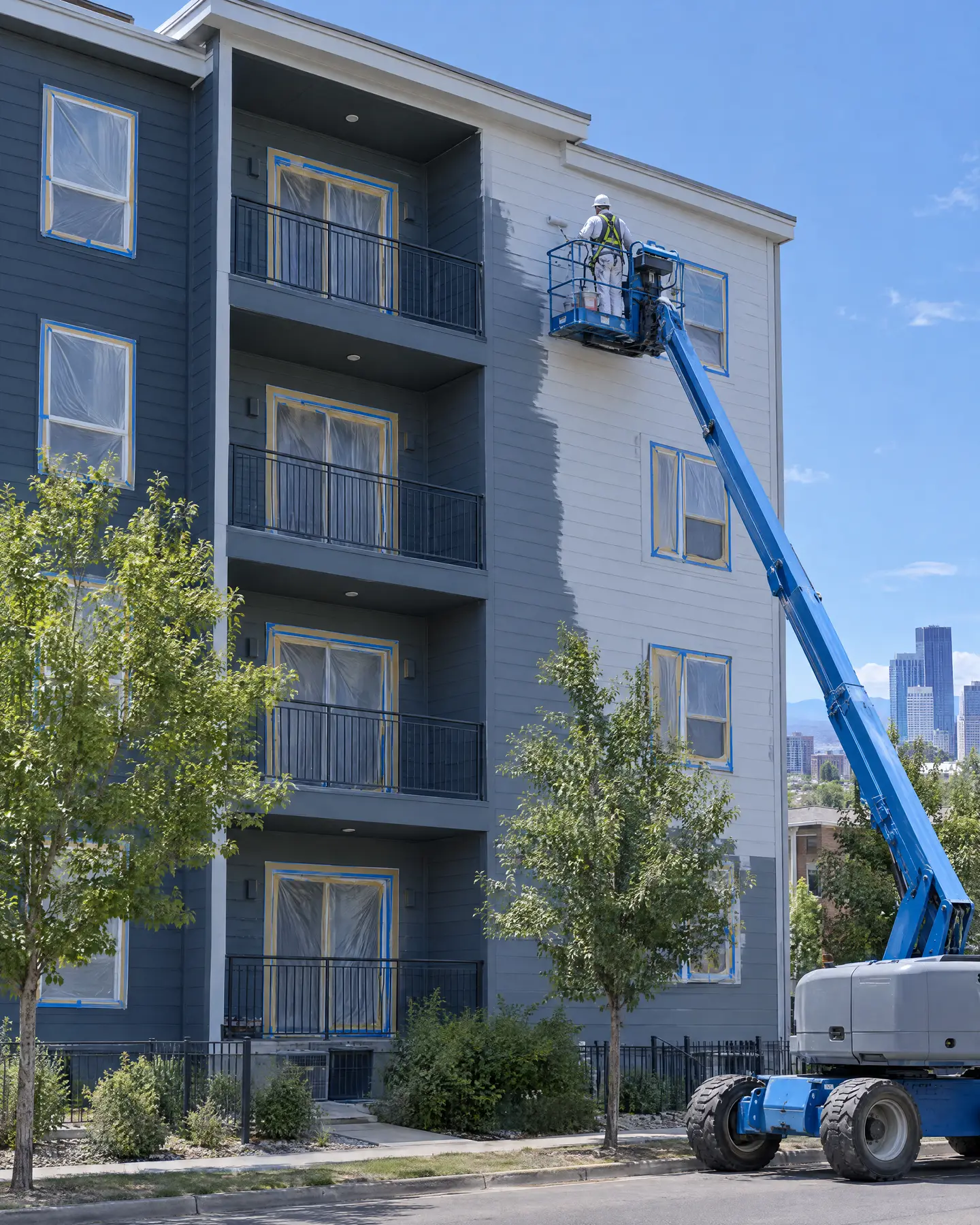
Fall is the right time to walk a commercial building for hail damage: the Front Range hail season, which runs mostly from spring through late summer, is behind you, and the freeze-thaw cycles that turn small openings into larger repairs haven't started in earnest. Hail damage on walls and trim is easy to miss from the parking lot, and the parts that matter most are often small: a puncture in a sealant joint, a chip down to bare steel, a dent in an EIFS wall. This checklist goes element by element, with what to look for and the repair that usually follows.
Before you start the walk
- Note the dates of any hail storms that hit the property this year, and check whether repairs or patching have already been done since.
- Start on the sides of the building that faced the storm, where impacts are usually heaviest, then work around the rest.
- Walk in low, angled light in the morning or late afternoon. Raking light shows dents and chips that disappear at midday.
- Take a wide photo of each wall, then close-ups of damage with a tape measure or coin in the frame for scale.
- Mark each location on a simple site plan so the photos can be matched to the building later.
- Use binoculars for upper floors and leave rooftop access to people trained and equipped for it.
If damage looks significant and a claim is likely, contact your insurer or adjuster before repairs start, and keep the dated photos with the property file.
1. Painted wall coatings
What damage looks like
- Clusters of small chips or spalls in the paint, concentrated on one or two sides of the building.
- Bare substrate showing through on wood, fiber cement or painted masonry.
- Dents or splits in wood and composite siding, with cracked paint around the edges.
- Fresh, bright spots where the weathered top layer has been knocked off.
Usual repair
Scattered chips can be scraped, feathered and spot-primed where the substrate is exposed. The catch is appearance: touch-ups on weathered paint rarely match in color or sheen, so damage spread across a wall usually means repainting that wall corner to corner. If the building was already approaching its next repaint, it often makes sense to fold the hail repairs into the work and reset the commercial repainting schedule from there.
2. Sealant joints
What damage looks like
- Cuts, gouges or punctures in the sealant at control joints, window perimeters and panel joints.
- Sealant pulled away from one side of the joint, leaving a gap.
- Hard, cracked sealant that split on impact because it had already lost its flexibility.
Usual repair
Damaged sealant should be cut out and replaced, not caulked over. That means removing the old bead, cleaning the joint faces, installing new backer rod where needed, priming if the sealant manufacturer calls for it, and tooling a new bead. Sealants have their own temperature limits on the data sheet, so open joints are one of the first things to fix before cold weather. Water that gets through a joint and freezes behind it can cause damage well beyond the joint itself.
Common Mistake
Painting over a punctured or split joint hides the damage without closing it. The paint film bridges the gap for a short time, then cracks along the same line, and water keeps getting in.
3. Metal trim, coping and flashing
What damage looks like
- Dents in parapet coping, gutters, downspouts, fascia and door frames, easiest to see in raking light.
- Chipped factory or field finish at the high points of dents.
- Early rust at chips on steel, often visible as orange spotting by fall.
- Coating loss on hollow metal doors and railings on the exposed sides.
Usual repair
Whether dented metal gets replaced is usually a sheet metal or roofing decision, and painting follows that work. Where the metal stays, chips on steel need cleaning to sound metal and a rust-inhibiting primer before the topcoat, and the sooner the better, since bare steel corrodes through the winter. Factory-finished metal often needs a specific primer or adhesion testing before it can be field painted; follow the coating manufacturer's guidance for the existing finish. This is where careful surface preparation and specialty coatings make the difference between a repair that lasts and one that peels by spring.
4. Stucco and EIFS
What damage looks like
- On traditional stucco, chips, small craters and hairline cracks radiating from impact points.
- On EIFS, round dents or punctures in the finish, sometimes exposing the mesh or the foam board underneath.
- Dark or damp areas around punctures after rain or snow, which can mean water is getting behind the surface.
Usual repair
Tap lightly around impacts on EIFS; a soft or hollow feel means the damage goes deeper than the finish. EIFS repairs should follow the system manufacturer's published repair procedure, which typically involves cutting out the damaged area and rebuilding the base coat, mesh and finish. Stucco cracks and spalls are patched before coating. In both cases, the coating that goes over the repair should be one the system manufacturer lists as compatible. Elastomeric coatings are often used over stucco to bridge hairline cracks, but they aren't a substitute for patching open damage.
5. Rooftop equipment screens
What damage looks like
- Dented or bowed metal panels and louvers on the screen walls around rooftop units.
- Chipped coating on the top edges and windward faces, with rust starting at the chips.
- Cracked or broken composite panels, and fasteners that have loosened or popped.
Usual repair
Screens take direct hits and are rarely looked at from the ground, so they're often in worse shape than the walls below. Loose fasteners and broken panels need attention first, since a loose panel in a Front Range wind is a hazard. Painted steel screens can usually be cleaned, spot-primed and recoated, or fully recoated with a protective coating system if the damage is widespread. Roof membrane damage found during the walk belongs to your roofer; note it and pass it along.
Bottom line
- Fix what lets water in before freeze-thaw starts: open sealant joints, punctured EIFS, cracked stucco and bare steel.
- Cosmetic chipping on sound paint can wait for spring and a full wall repaint.
- Photograph and date everything before repairs begin.
Once you've walked the building and sorted what can't wait, a site walk and written scope can turn the list into a repair plan. Hail repairs can lead into a full commercial exterior painting project, and the order of work matters: sealant and substrate repairs first, then coatings. To get a scope started, request an estimate.