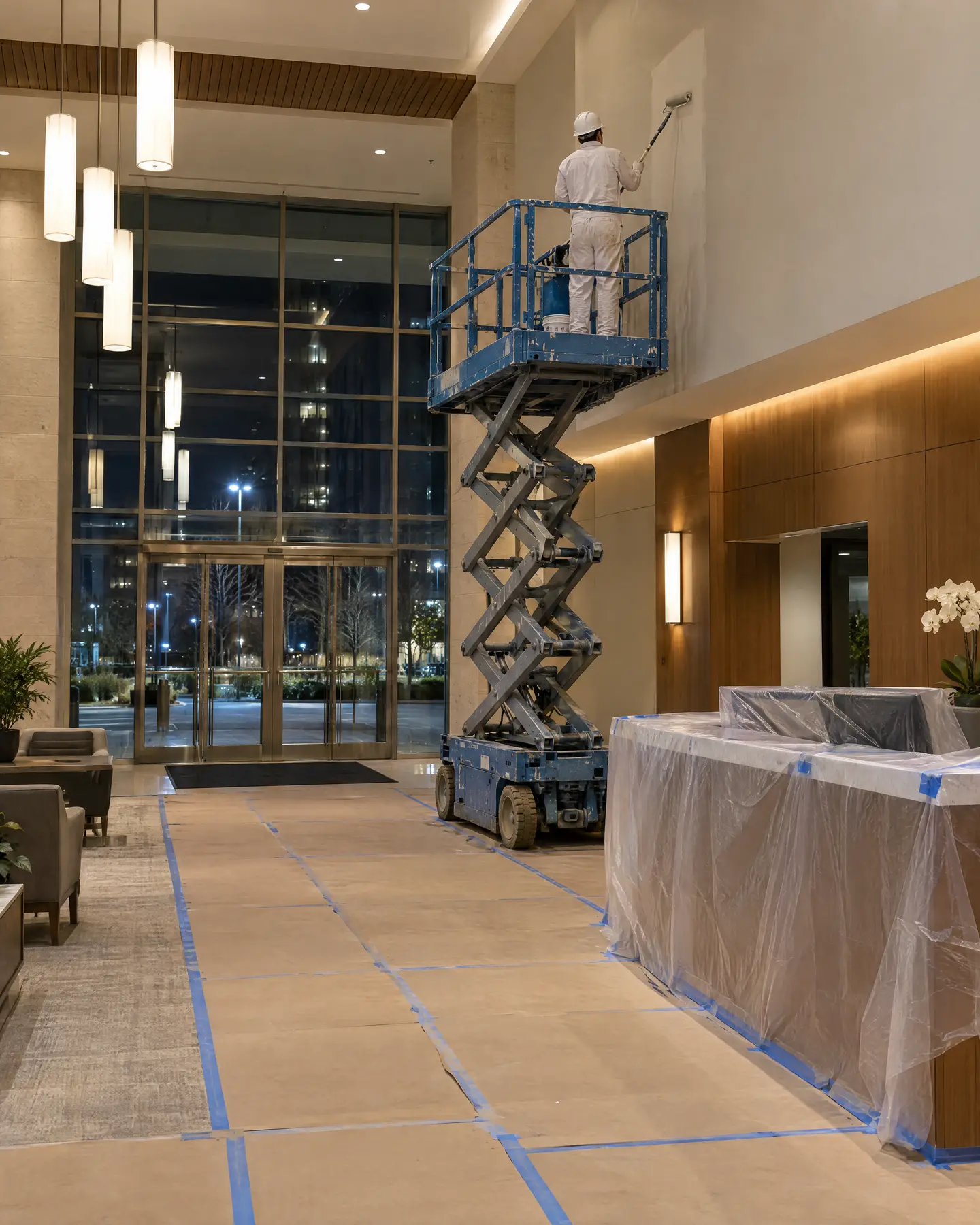
Winter is a practical season for commercial interior painting because indoor work doesn't depend on outdoor temperatures, and many buildings have quieter weeks around the holidays when common areas, suites and stairwells are easier to reach. The catch is that windows stay shut and some spaces run cool, so ventilation, drying time and tenant communication need more planning than they do in summer. These are the questions property managers ask most often before booking winter interior work.
Why schedule interior painting in winter instead of spring or summer?
Exterior coatings have minimum temperature limits, so on the Front Range most exterior work slows or stops through the cold months. Interior work runs on the building's own heating, which makes winter the natural time for lobbies, corridors, stairwells, restrooms and vacant suites. Getting interiors done now also keeps them from competing with exterior repainting for your attention and your tenants' patience once spring arrives.
Winter suits work that needs open floor space, too. A suite between tenants, a corridor during a slow week or a lobby over a long weekend can be painted with fewer people walking through. Our page on commercial interior painting lists the kinds of spaces and surfaces this covers.
How do you ventilate when the windows stay closed?
Through the building's mechanical system, planned with whoever runs it. Before work starts, the painting contractor and the building engineer or HVAC vendor should agree on a few points:
- The system is supplying outside air to the work area during painting and drying, not just recirculating
- Night and weekend setbacks are adjusted for the work area if painting happens after hours
- Return grilles near sanding or patching are covered while dust is being made, then uncovered so the space can ventilate
- Exhaust fans in restrooms and stairwells are running where they exist
The product data sheet and safety data sheet for each coating state its ventilation requirements. Those documents, plus the building's normal HVAC practice, set the standard. Portable fans can move air within a space, but they don't replace fresh air from the system.
Common Mistake
Painting a suite on Friday evening while the building drops into its weekend setback. The space cools, airflow drops and the paint dries slower than planned, which can leave odor in the space on Monday morning and push back the second coat.
Do low-odor or low-VOC paints solve the problem?
They help, but they don't remove the need to ventilate. Most interior wall and ceiling paints are now available in low-VOC formulations, and many are labeled low-odor. That makes them a sensible default for occupied buildings in winter. Even so, a low-odor product still releases some odor while it dries, and its data sheet still lists ventilation requirements.
Some coatings carry stronger odors regardless of formulation: certain enamels for doors and metal frames, epoxies, and solvent-borne primers used for stain blocking or adhesion. Schedule those for times when the area is empty, and keep ventilation running afterward for as long as the data sheet recommends. If a tenant raises a specific concern, share the product names and safety data sheets so they can review them.
How long does paint take to dry in a cool building?
Longer than the label suggests if the space is cold. Drying and recoat times on a product data sheet are measured at a standard condition, usually 77 degrees Fahrenheit and 50 percent relative humidity. Cooler air and cooler wall surfaces slow drying, and the data sheet also lists a minimum application temperature that the air and surface must meet.
Most occupied space stays warm enough. The problems show up in stairwells, vestibules, loading areas and vacant suites where the heat has been turned down. Exterior walls in those spaces can be colder than the air around them. Bring the space up to temperature before painting, keep it there through drying, and check surface temperature if there's any doubt.
Keep in mind the difference between dry to touch, ready to recoat and fully cured. A wall can feel dry in an hour or two and still mark easily for days. Hold off on rehanging artwork, pushing furniture back against walls or scrubbing new paint until the product has had its full cure time.
Can the work fit around holiday schedules?
Often, yes, and holiday weeks can be the best time for common areas. In many office buildings, the days around Christmas and New Year's are quiet, so corridors, lobbies and break rooms can be painted with fewer people passing through. Plan for these points:
- Confirm which tenants operate through the holidays. Medical offices, call centers and retail tenants may be busier, not quieter.
- Arrange after-hours and weekend building access, alarm codes and security escorts in advance.
- Reserve loading docks and service routes for moving materials.
- Book early. Holiday weeks are short, and they're the same weeks other buildings want.
For buildings with retail on the ground floor, flip the logic: avoid shopper-facing areas in the weeks before the holidays and paint them in January instead.
Bottom line
- Agree on HVAC settings with the building engineer before the first coat.
- Keep cold spaces heated through application and drying.
- Send tenants dates, areas and a contact name well before work starts.
How much notice should tenants get, and what should it say?
Start with the leases. Some specify how much notice the landlord must give before work in or near a tenant's space, and that sets the minimum. Beyond that, earlier is better, followed by a reminder a few days before work starts.
A useful notice covers:
- The dates and hours for each area, in the order the work will happen
- Which entrances, corridors or restrooms will be affected
- What tenants need to move away from walls, and who moves it
- The products being used, with safety data sheets available on request
- A name and contact for questions during the work
Our project process covers how phasing and communication are planned around occupied buildings.
How are floors, finishes and furnishings protected?
With protection planned in the scope, not improvised on the day. Floors along work areas and material routes get covered, and winter adds meltwater and de-icing salt tracked in at entries, so floor protection near doors has to handle wet traffic without becoming a slip hazard. Hardware, signage, card readers and light fixtures get masked or removed and reinstalled.
Life safety devices need particular care. Sprinkler heads, smoke detectors and fire alarm devices should be covered during painting and uncovered at the end of each shift. NFPA 25 generally requires a sprinkler head with paint on it to be replaced rather than cleaned, so this is not a step to skip.
Finally, choose the sheen for the traffic. High-traffic corridors and stairwells hold up better to cleaning in a sheen the manufacturer rates as scrubbable, which matters in a season of wet boots and salt.
We work with buildings across the Front Range communities we serve, from Colorado Springs to Fort Collins. If you have common areas or suites to paint this winter, you can request an estimate.